Activation
Doesn’t come to mind
Inaction is the most expensive behaviour in financial services. People fail to plan, invest, or follow through.
It’s rarely a logic problem. Money is one of the most emotional areas of our lives, and the difficulty is, people don’t know what’s really driving them.
I help you pinpoint what’s actually stopping people, and design how to fix it.

SOME OF THE FINANCIAL SERVICES ORGANISATIONS I'VE WORKED WITH











I help financial services teams when a specific client, member or user action stalls. I diagnose where and why, design a change to the relevant message, journey, service or conversation.
I work with the team that can change that moment, whether it sits in member experience, marketing, advice, product or service.
Members move their super elsewhere in the lead up to retirement.
Our retirement members stay in accumulation.
Retirees want a guaranteed income but don't buy one.
We offer advice and planning tools, but members don't use them.
Members switch to cash after markets fall.
Inaction is a symptom, which requires careful diagnosis to fix. I use a science-backed approach to reveal where behaviour is really failing and how it needs to be fixed.
Doesn’t come to mind
Doesn’t feel worth doing
Doesn’t become action
Doesn’t strengthen future behaviour
Every stage leaves you with something you can use, whether or not you take the next one.
Are you solving the right problem? In a two-hour workshop, we pin down who needs to do what differently, when and in what situation. We scrutinise any assumptions being made and work out which ones hold up.
YOU GET
A written Behavioural Brief setting out the behaviour to change, the specific audience, the assumptions to test and how we'll know it's worked.
The point where behaviour happens is rarely where the problem begins. I work from any information you already have: your data, your messages, your call recordings, your screens. I also source additional data where needed.
I then combine this evidence with robust academic literature and experience, and analyse it through the four points of behavioural failure: Activation, Motivation, Volition and Reinforcement.
YOU GET
A plain explanation of where and why people stall, what's still uncertain, and a short list of changes ranked by effort and impact.
Once we have diagnosed what's stopping behaviour, we design the fix for it. There are dozens of behavioural techniques at our disposal. So we need to specify each intervention properly: the message, the framing, the sequence and who delivers it. Then we test how the behaviour changed.
YOU GET
Detailed changes your team can put into practice, and the measure that tells you if they worked.
Not sure where to start? Tell me about the behaviour in a 30-minute call, and we'll work out whether the workshop is the right first step.
Working with financial services organisations to change what customers actually do.
Users were dropping off before they ever reached the right annuity. I found out where, and why.
Increase in conversions
Humans and Money brought a level of behavioural insight we simply couldn’t have uncovered on our own.
Steve Butler

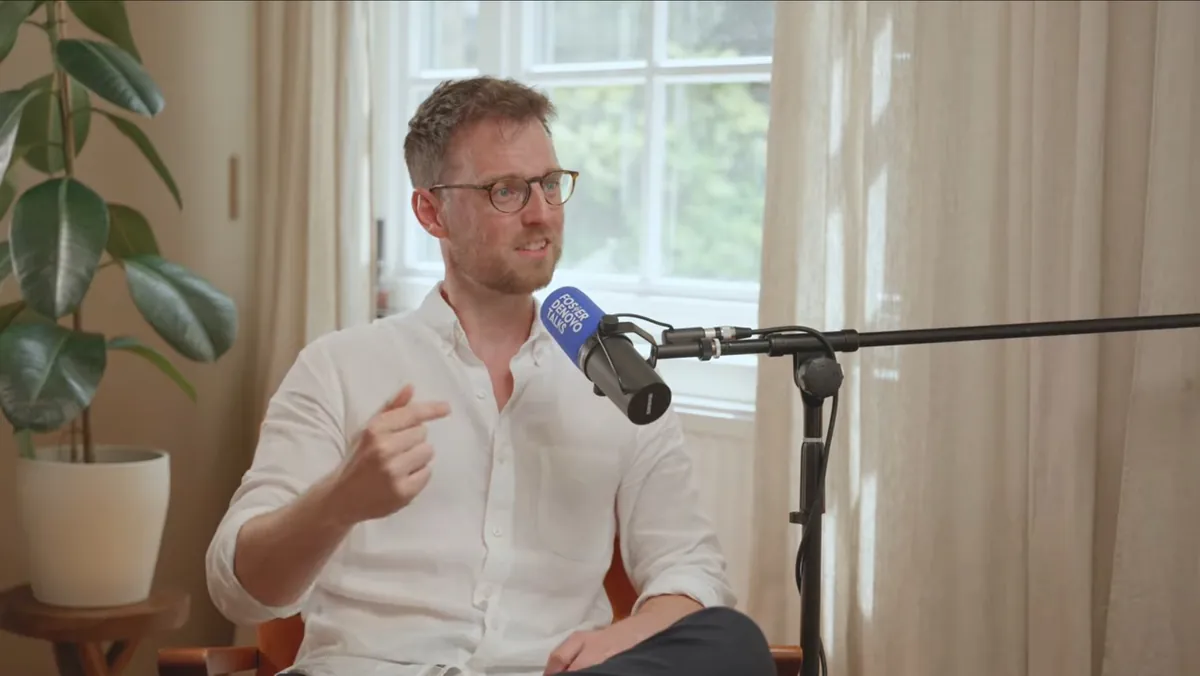
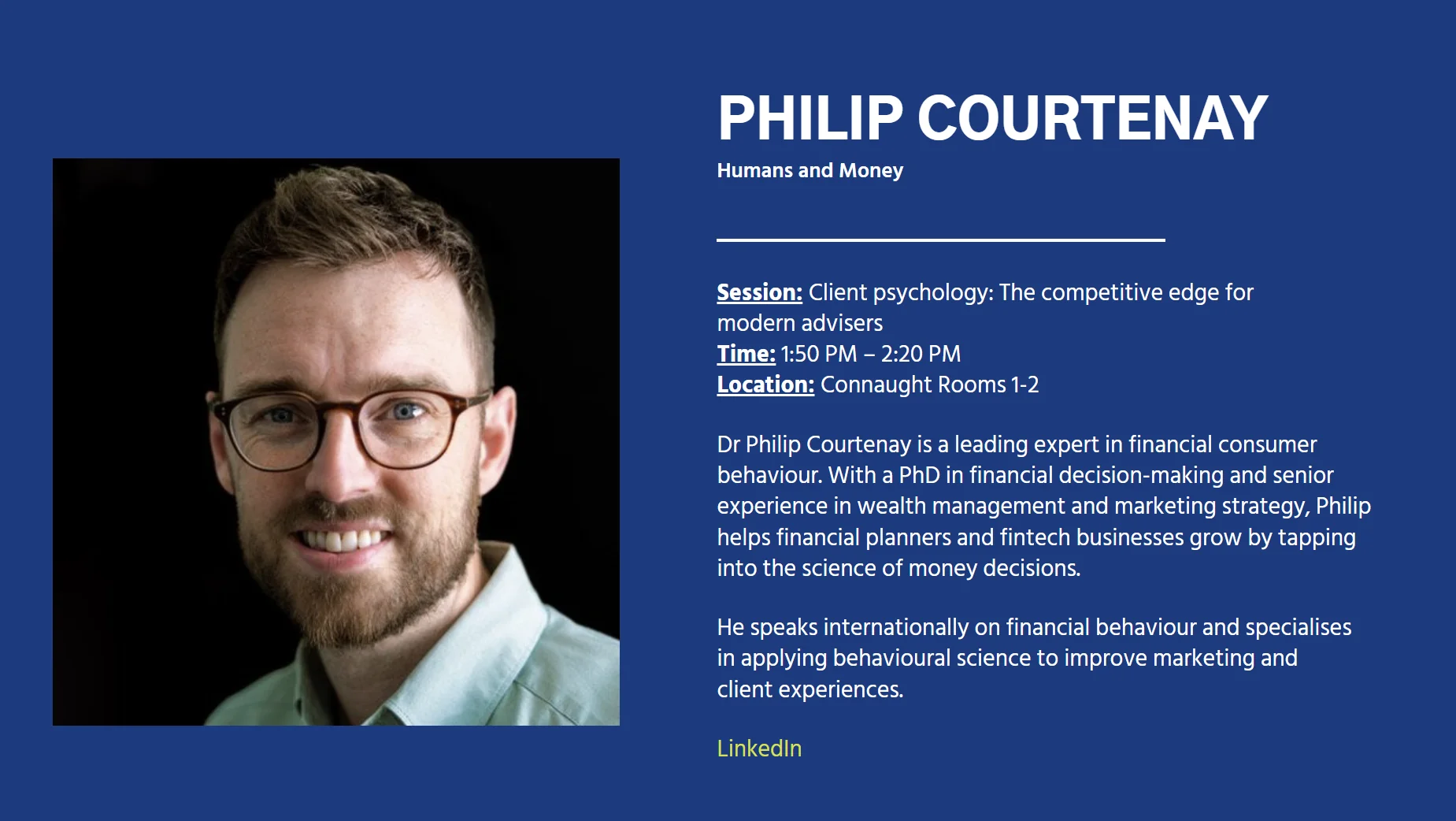
Dr Philip Courtenay
About me
I'm Dr Philip Courtenay. I spent 18 years in marketing and strategy roles - most of it in financial services. The thing that intrigued me most was how anxious money made people, even those who had plenty of it.
People rarely do the rational thing with money, and I wanted to know why. That became the focus of my MBA specialism and took me back to do a PhD in financial decision-making some years later. You can't take the emotion out of how people handle money, but you can design for it. That's what I do now: I find where behaviour breaks down and redesign the experience so people act.
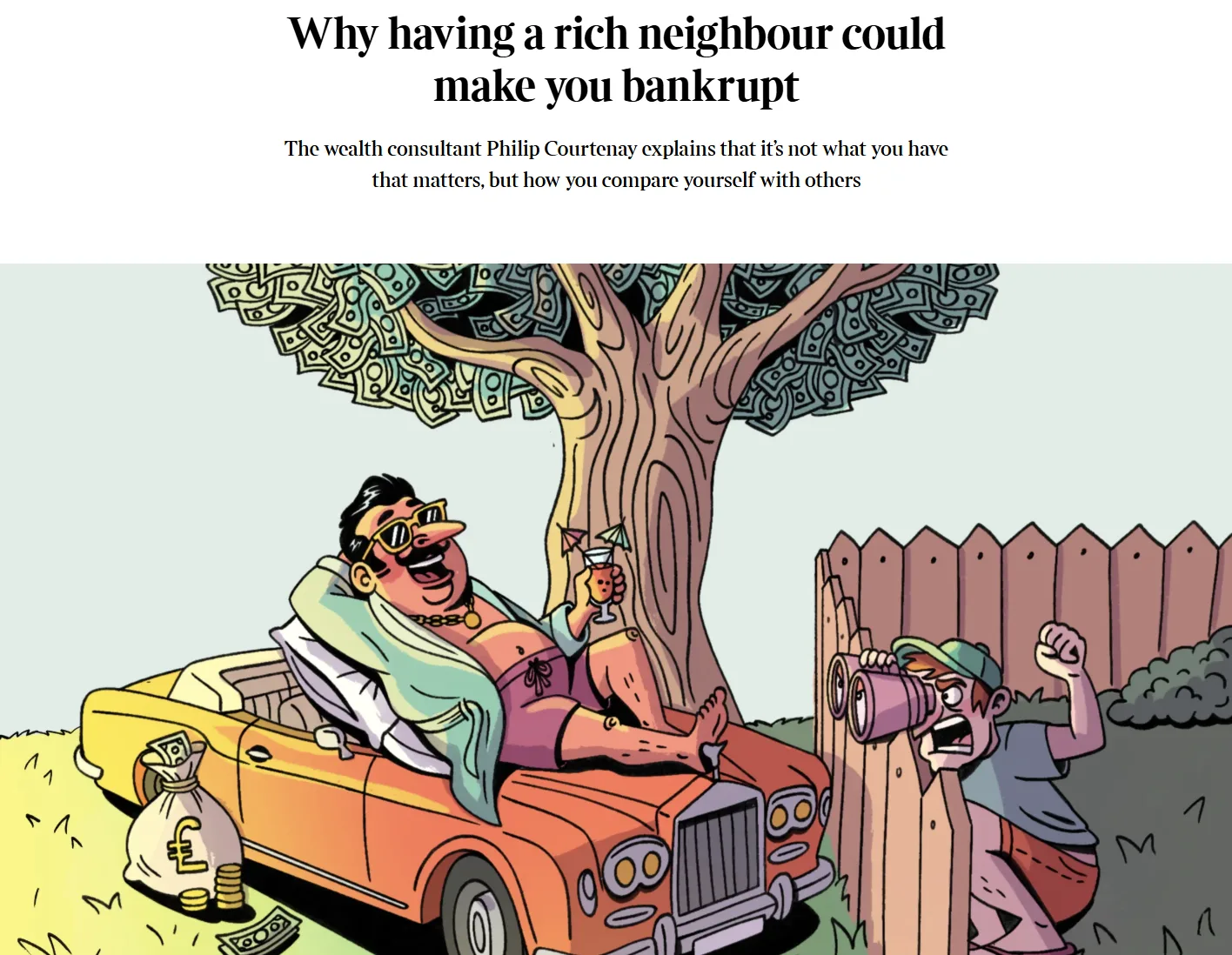
I'm frequently asked to speak and write about changing financial behaviour. Check out some of the examples below for a flavour of what Humans and Money is all about.
Book a call to talk through what your customers aren't doing, and what it would take to change it.
We'll discuss what you're working on and explore how behavioural science might help.
Open the booking page in a new tab